By Zach Mayfield, LMT — Founder of Body In Gear Physical Therapy in Palatine, IL. His practice is built around diagnosing the root cause of chronic and unexplained pain — often soft tissue dysfunction — before building a treatment plan.
Quick answer: myofascial release vs. deep tissue massage is not simply a question of gentle versus intense pressure. Myofascial release is typically slower and more sustained, with attention to fascial restriction. Deep tissue massage generally uses more active, targeted strokes for areas of muscle tension. Both may be useful within hands-on care, but neither is automatically the right choice for every symptom.
- Targets the fascia (connective tissue)
- Slow, sustained pressure held in one spot
- No oils or lotions used
- Best for chronic, fascial restriction
- Targets deeper muscle layers
- Firmer, more active kneading strokes
- Oils/lotions typically used
- Best for acute muscle tension/knots
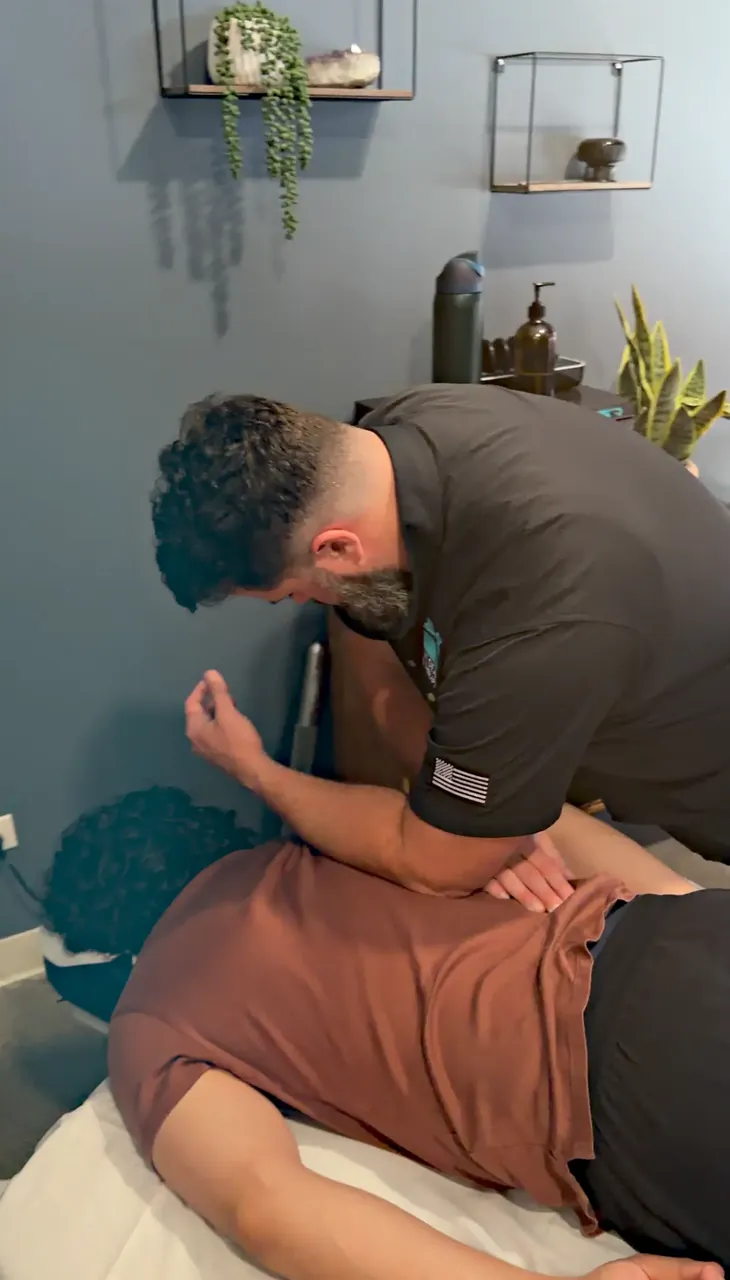
Myofascial Release vs. Deep Tissue Massage: At-a-Glance Comparison
| Question | Myofascial Release | Deep Tissue Massage |
|---|---|---|
| Typical focus | Fascial restriction and tissue mobility | Muscle tension and deeper muscle layers |
| Typical pace | Slow, sustained contact held in one area | More active strokes, kneading, and targeted pressure |
| Pressure | Can be gentle to firm; depth is not the goal by itself | Often firm, but should remain within a person's tolerance |
| How it is chosen | The assessment, symptom pattern, medical history, and response to treatment should guide the plan. | |
What Is the Difference Between Myofascial Release and Deep Tissue Massage?
The core distinction is what tissue is being emphasized and how the hands-on work is delivered. Myofascial release therapy focuses on the fascia, the connective tissue layer that surrounds and supports muscles. A clinician uses sustained contact and waits for tissue response rather than continuously gliding. Deep tissue massage usually emphasizes deeper muscle layers with more active, firm strokes. These descriptions are useful starting points, not rigid categories: skilled care may combine techniques when the evaluation supports it.
Which One Is Better for Chronic Pain?
Neither technique is universally better for chronic pain, because chronic pain can involve multiple drivers. A 2021 systematic review and meta-analysis reported that myofascial release was associated with improved pain and physical function for chronic low back pain; results should not be generalized to every diagnosis or viewed as a guarantee of relief. Massage research more broadly also has limits: the National Center for Complementary and Integrative Health notes that evidence for chronic low-back pain is weak and cannot determine that one massage style is superior. A careful evaluation is more useful than choosing a technique by name alone.
How Does Session Length and Pace Differ?
Deep tissue massage commonly moves through several areas with active strokes. Myofascial release is usually slower and more deliberate, with contact held in a specific area. Because technique, symptom history, and tolerance vary, pressure is not a scorecard; more pressure is not automatically more therapeutic. At Body In Gear, a full session allows time for assessment, treatment, and reassessment rather than treating hands-on work as a brief add-on.
Can They Be Used Together?
Yes. A clinician may use deep tissue techniques, myofascial release, and other manual approaches in the same treatment plan when they fit the findings. At Body In Gear, medical massage describes the clinical, diagnosis-first framework for that decision; deep tissue massage describes a pressure technique that may or may not be used. If an assessment identifies a distinct adhesion, Manual Adhesion Technique may also be considered.
Which Should I Choose for My Symptoms?
Recent, localized muscle tension may respond to a more direct deep-tissue approach. Longer-standing stiffness, restricted movement, or symptoms that return after standard massage may warrant a closer look at fascia, movement patterns, workload, and related factors. Those patterns can overlap, so this is not a self-diagnosis guide. A physical therapy assessment in Palatine can help determine whether hands-on care is appropriate and how it should be paired with exercise or other treatment.
Is One Safer Than the Other?
Manual therapy is generally considered low risk when it is appropriately selected and delivered, but it is not right for every situation. Rare serious adverse effects reported with vigorous massage include blood clots, nerve injury, and fractures. Tell the clinician about blood thinners, known fractures, a history of clots, open wounds, recent surgery, or other relevant health conditions. Seek prompt medical assessment rather than massage for new weakness, numbness, loss of bladder or bowel control, fever, unexplained weight loss, or severe pain after an injury.
What Do Patients Actually Notice as the Difference?
Most people notice the pace first. Deep tissue massage can feel more active, with firm, targeted work through muscle groups. Myofascial release often feels slower and more still, with sustained contact that may resemble a deep stretch more than a conventional gliding massage. Comfort and response should be checked throughout either approach.
What Should You Tell Your Clinician Before Treatment?
Bring a clear picture of when the symptoms started, what makes them better or worse, whether pain travels or causes numbness, any recent injuries or surgeries, and prior responses to massage or physical therapy. That information helps distinguish a short-term muscle complaint from a pattern that needs a different evaluation or a broader rehabilitation plan.
Where This Fits at Body In Gear
Rather than defaulting to one technique for every patient, Body In Gear's diagnostic-first model considers whether fascial restriction, muscular tightness, or another contributor may be involved. The plan can use medical massage, myofascial release, and Manual Adhesion Technique where appropriate, alongside exercise or referral when indicated. For a related comparison of treatment framework versus pressure technique, see medical massage vs. deep tissue massage.