Deep tissue massage is a specific pressure technique targeting deeper muscle layers; medical massage is the broader clinical framework a treatment is delivered within, which may or may not use deep tissue technique depending on what's actually diagnosed. In plain terms: deep tissue describes how hard the pressure is, medical massage describes why the treatment is happening and what it's built around.
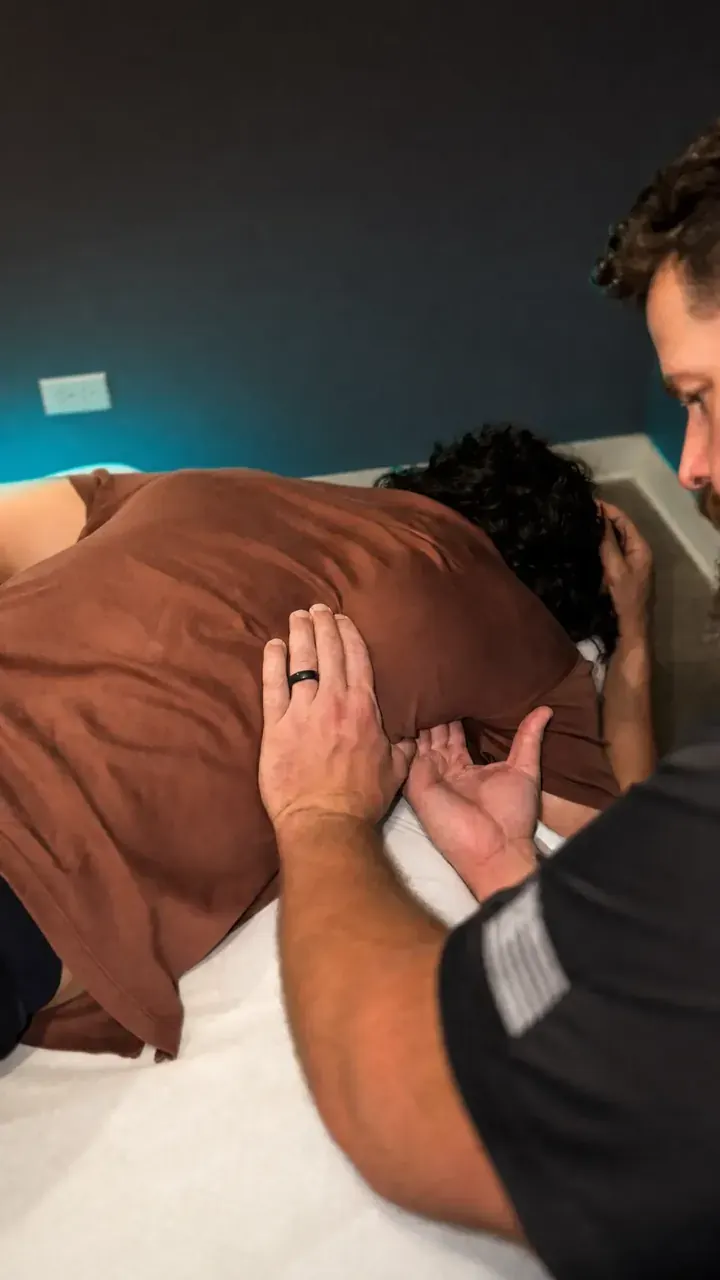
What is deep tissue massage, specifically?
Deep tissue massage uses sustained, firm pressure and slow strokes to reach deeper layers of muscle, tendon, and fascia — different from a lighter relaxation-style massage that primarily works at the surface. Cleveland Clinic and other clinical sources describe it alongside Swedish massage as one of the most common soft tissue manipulation techniques used in both wellness and treatment-focused settings.
One useful clinical distinction, drawn from massage therapy research: there's a real difference between deep massage (any technique applied with the intention of reaching deep tissue) and deep tissue massage specifically (a defined method with its own set of principles — working through the layers of the body to release holding patterns within a client's comfort). In practice, "deep tissue massage" gets used loosely to mean "hard pressure," when it's actually a specific technique with its own methodology.
What is medical massage, and how is that different?
Medical massage — sometimes called therapeutic massage — isn't a pressure technique at all. It's the clinical framework: an approach built around a diagnosed problem, delivered as part of a treatment plan, and adjusted based on what a patient's specific dysfunction requires. At Body In Gear, medical massage is one part of a physical therapy plan, sequenced with myofascial release and Manual Adhesion Technique based on intake findings — not a standalone spa service.
Depending on what's actually diagnosed, a medical massage session might use deep tissue technique, lighter technique, or a combination — the pressure level is chosen based on the problem, not applied as a default.
The real difference, side by side
| Deep Tissue Massage | Medical Massage | |
|---|---|---|
| What it describes | A specific pressure technique | A clinical treatment framework |
| Decided by | Client preference or general soreness | Diagnosis and treatment goal |
| Setting | Spas, wellness centers, or clinical settings | Clinical settings, delivered as part of a treatment plan |
| Can they overlap? | Yes — deep tissue technique may be used within a medical massage session | Yes — medical massage may include deep tissue technique when appropriate |
They're not competing categories — one describes a technique, the other describes the context and purpose it's delivered within. A medical massage session can absolutely use deep tissue pressure; a deep tissue massage at a spa is not automatically a medical massage.
Which one do I actually need?
If you want general muscle tension relief and aren't dealing with a specific, diagnosed issue, a standard deep tissue massage at a wellness setting may be exactly right — that's a legitimate, valuable service on its own.
If you have a specific, ongoing pain problem — chronic tension, an area that's been bothering you for months, something tied to a larger pattern of dysfunction — medical massage as part of a real intake and treatment plan is built to actually address the cause, not just the symptom for a day or two.
Worth being upfront about: medical massage generally isn't a quick fix. Clinical research on manual soft tissue therapy consistently shows that meaningful, measurable improvement tends to require multiple sessions, not a single visit — the same logic that applies to physical therapy generally.