Medical massage — also called therapeutic massage — is treatment-focused bodywork used to address a diagnosed problem, typically delivered in a clinical setting by professionals trained to identify and target specific problem areas, not a relaxation service. At Body In Gear, medical massage is one part of a physical therapy treatment plan, structured by clinical outcome and sequenced with myofascial release and Manual Adhesion Technique (MAT), not offered as a standalone spa experience.
If you searched for "massage near me" and landed here — worth knowing upfront: Body In Gear is a physical therapy clinic, not a massage business. What we do is closer to a targeted medical treatment than a relaxing hour at a spa. Here's the actual difference.
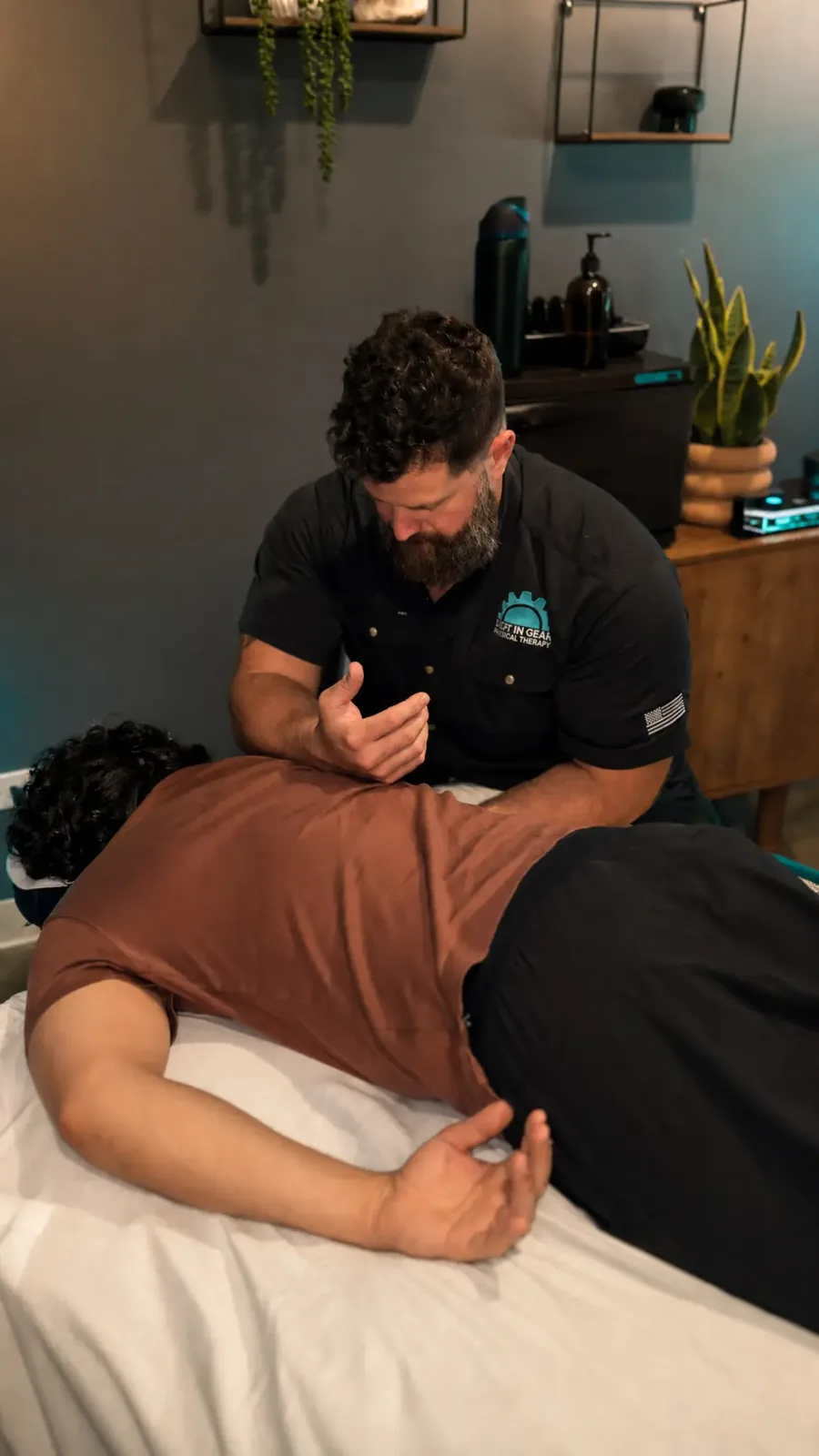
What makes massage "medical" instead of relaxation-focused?
The difference isn't really about pressure or technique — it's about intent and structure. Cleveland Clinic describes therapeutic (medical) massage as work that typically takes place in a clinical setting and involves focused treatment of a specific soft tissue problem, delivered by trained professionals — a different model from a general full-body relaxation session. The American Physical Therapy Association's Guide to Physical Therapist Practice similarly classifies soft tissue mobilization as a manual technique used specifically to improve tissue mobility and decrease pain, not a wellness service.
At Body In Gear, medical massage is:
- Structured by frequency, treatment goal, and clinical outcome — not a standing weekly indulgence
- Varied in pressure, depth, and technique based on what the specific dysfunction actually needs
- Used as a precursor to deeper work — it helps unlock the nervous system before myofascial release and MAT, rather than being the entire treatment
- Delivered within a diagnostic framework: intake and assessment come first, treatment plan second
Do I need a referral or diagnosis to get medical massage?
No formal referral is required to be seen at Body In Gear, but every new patient goes through a real intake and assessment before any treatment plan is built — including a medical massage plan. This is the core difference from walking into a massage chain and picking a package off a menu: the treatment is built around what's actually causing the pain, not a generic 60-minute session.
Clinical research on manual soft tissue work supports this outcome-driven approach: a 2023 randomized controlled trial on jaw muscle dysfunction found that massage combined with therapeutic exercise was the most effective intervention studied, with measurable improvement in muscle function appearing after 10 treatment sessions. That's the category medical massage belongs to — outcome-driven treatment tracked over a series of visits, not a one-off wellness add-on.
How is this different from what I'd get at a massage franchise?
Massage franchises are built around volume and standardization — the same general protocol, delivered by whichever therapist is available, on a schedule built around membership pricing. That's a legitimate model for general relaxation and maintenance, but it isn't built to diagnose or treat a specific dysfunction.
At Body In Gear, treatment is built around an actual diagnostic process, delivered by the same clinician tracking progress across visits, and sequenced with other soft tissue modalities (myofascial release, MAT) specifically chosen for what intake reveals. For general relaxation or occasional stress relief, a standard massage membership may genuinely be the better and more affordable fit. If the goal is resolving a specific, ongoing pain problem, that structural difference is the whole point.
What does a medical massage session at Body In Gear actually involve?
Every new patient starts with an intake to identify the specific source of pain or dysfunction. From there, a medical massage session may include:
- Targeted pressure and technique matched to the diagnosed area of restriction, not a generalized full-body pattern
- Sequencing designed to prepare the nervous system and tissue for deeper myofascial or MAT work later in the treatment plan
- Ongoing adjustment across visits based on how the tissue is actually responding — not a fixed protocol repeated every time
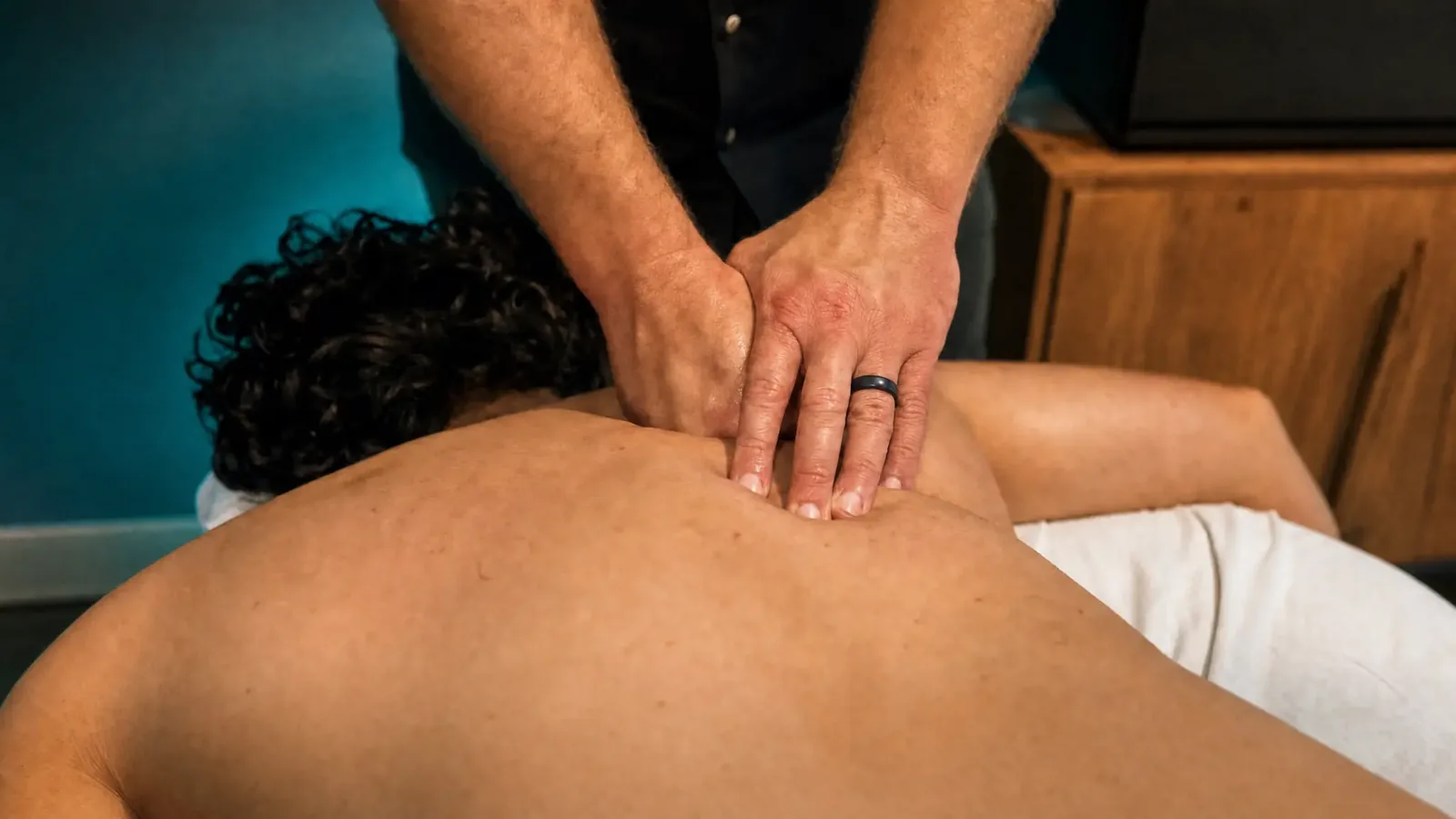
What kinds of pain does medical massage help with?
Medical massage at Body In Gear is most often used for chronic back and neck tension, tension headaches rooted in muscle tightness, and as a preparatory step before myofascial release or MAT for patients with longer-standing soft tissue dysfunction. It's not positioned as a standalone fix for structural conditions like a herniated disc or a fracture — those need a broader diagnostic workup first, which is exactly what the initial intake at Body In Gear is designed to catch.