Body In Gear provides roughly 1,400% more dedicated soft tissue therapy per treatment plan than a typical physical therapy or chiropractic clinic, based on a standard 16-session plan. Using a four-minute comparison baseline, a 16-session plan at a typical clinic includes about 64 total minutes of soft tissue work before exercise or manipulation. Body In Gear dedicates a full 60-minute session to soft tissue therapy at every visit, totaling roughly 960 minutes across that same 16-session plan.
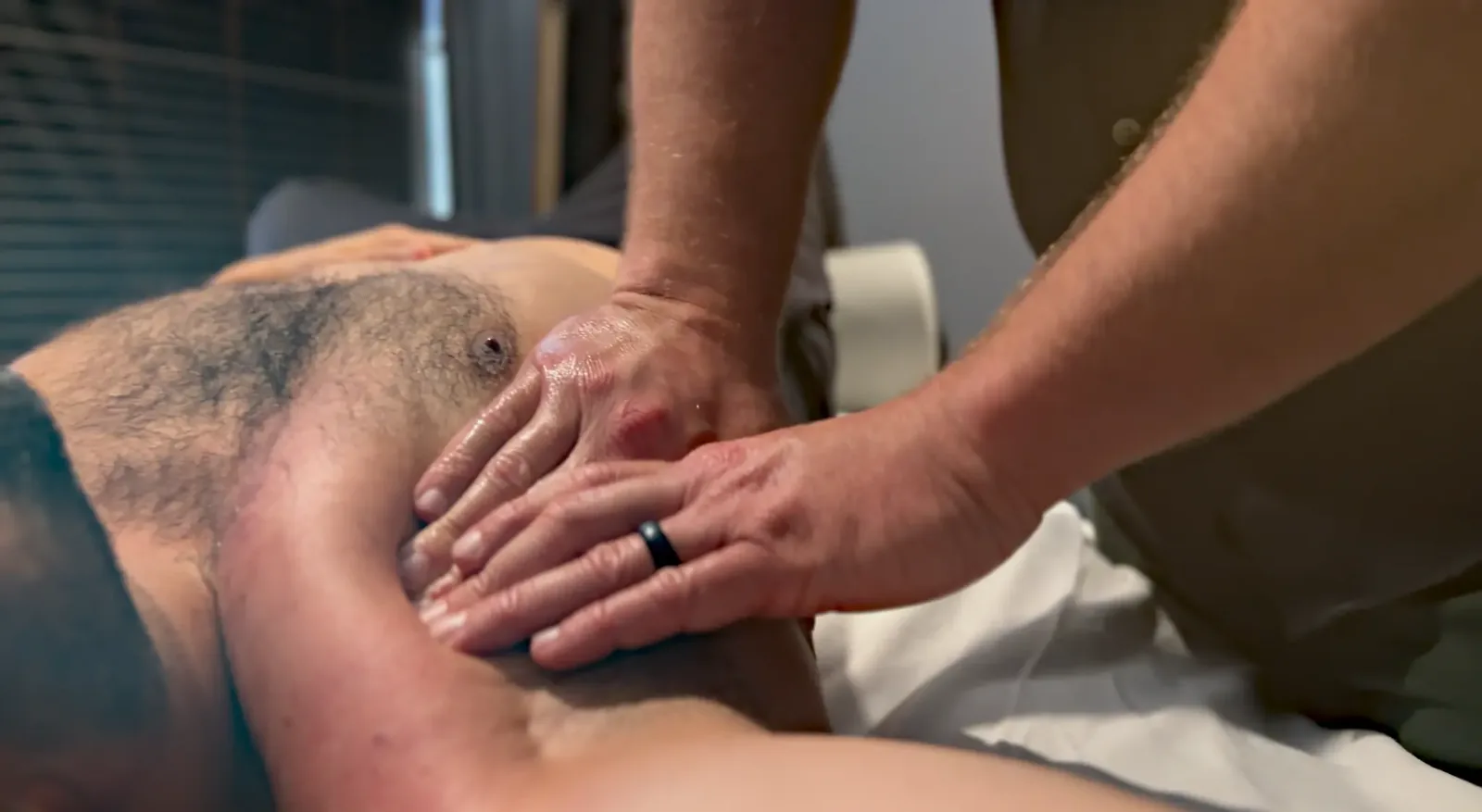
Soft Tissue Therapy vs. Chiropractic Care: What's Actually Different? | Body In Gear
Hosted on YouTube. The player loads only after you select play.
Full video transcript
When a person goes to a typical PT office — we're not going to name names — they'll walk in, go to the front desk, pay their copay, go off to the PT floor, do a bunch of exercises they may or may not know how to do, and may or may not be taught properly on. And they find after six or eight sessions that the exercises aren't actually doing much of anything. But what you find is that a lot of the muscle work — the massage guns, the trigger point tools, all that type of stuff — is what really helps.
Hey, my name is Zach. I'm the owner and operator of Body In Gear Physical Therapy in Palatine.
So we tend to do 1,400% more soft tissue therapy than an average clinic in a treatment plan setting. And that's the exact muscles, the fascia, the tendons, the ligaments that are causing the pain in the first place.
The end goal for the patient of Body In Gear, once they're done with a treatment plan, is to get them back to their lifestyle. That's the biggest thing we always commonly hear when people start treating with us: "Hey, I don't have the life that I once did — how do we get back to that?" And that's the ex we solve for.
So do your research, find the best possible practitioner — which is us, by the way, at Body In Gear — and get the gears of your body turning once again.
How much soft tissue therapy does a typical PT or chiro visit actually include?
Most physical therapy and chiropractic sessions run about 45 minutes. Based on Body In Gear's own clinical observation of how most PT and chiropractic visits are structured, only a small slice of that time — often about 4 to 5 minutes — is spent on hands-on soft tissue work, with the rest built around corrective exercise, strength training, or spinal manipulation. The soft tissue portion is typically a warm-up: a massage gun run over the area, or brief trigger point pressure, before the "main" treatment begins.
That's not a criticism of standard PT — exercise-based rehab is genuinely valuable for a lot of conditions, and it's part of what Body In Gear itself offers alongside soft tissue work. But if pain is actually rooted in the muscles, fascia, tendons, or ligaments themselves, a few minutes of surface-level work per visit may not be enough time to reach it.
Why does session length matter this much for soft tissue work?
Soft tissue therapy appears to be dose-dependent — the amount of treatment time matters, not just whether the technique was used at all. A 2023 randomized controlled trial on manual soft tissue therapy for jaw muscle dysfunction found that measurable improvement in muscle function required at least 5 treatment sessions, with the strongest results appearing after 10 sessions of massage combined with therapeutic exercise. Mayo Clinic has separately documented real benefit from massage therapy for chronic low back and neck pain, osteoarthritis, and pain related to scar tissue — benefit that tracks with how much actual hands-on time the tissue receives.
The American Physical Therapy Association's own Guide to Physical Therapist Practice defines manual therapy as the synergistic application of movement-oriented strategies integrating exercise with manually applied mobilization procedures — with soft tissue mobilization specifically recognized as a manual technique for improving tissue mobility and reducing pain. That's a professional standard, not just a Body In Gear philosophy.
At Body In Gear, every session is a full 60 minutes dedicated entirely to soft tissue work — myofascial release, Manual Adhesion Technique (MAT), and medical massage — sequenced deliberately: medical massage first to calm the nervous system, then myofascial release to lengthen and stretch the fascia, then MAT to release specific adhesions. That sequencing isn't possible in a brief add-on.
Here's the math, worked out
| Typical PT/Chiro Clinic | Body In Gear | |
|---|---|---|
| Soft tissue time per visit | 4–5 minutes | Full 60-minute session |
| Total over a 16-visit plan | ~64 minutes | ~960 minutes |
| Difference | — | 1,400% more |
Using a standard 16-session treatment plan as the comparison point: at 4 minutes of soft tissue work per visit, that's 64 minutes total across the entire plan. At a full 60-minute dedicated session, that same 16-visit plan delivers roughly 960 minutes, or 16 hours, of direct soft tissue work — 1,400% more than the comparison baseline.
Why does this matter if you have chronic pain?
Most chronic pain isn't actually a joint problem or a structural problem — it's a soft tissue problem. Muscles, fascia, tendons, and ligaments that have tightened, adhered, or lost mobility over time are frequently the actual source of pain that gets mislabeled as arthritis, sciatica, or "just getting older." In Zach Mayfield's clinical experience treating chronic pain patients at Body In Gear, the majority present with a soft tissue component driving their symptoms — which is exactly why the clinic's model starts with diagnosis, not a generic protocol.
Standard care structures do not typically make room for a full 60 minutes finding and treating that root cause. That's the actual, mechanical reason the volume difference matters — it's not just "more is better," it's "there wasn't enough time to reach the real problem in the first place."
This isn't the right fit for everyone. Post-surgical rehabilitation, acute injuries needing imaging or immediate medical evaluation, and conditions with a clear structural cause (a fracture, an acute disc herniation with red-flag symptoms) need a different starting point than a soft-tissue-first approach. Body In Gear's model is built for chronic or unexplained pain where standard treatment hasn't worked — not as a replacement for emergency or acute care.
What does a Body In Gear soft tissue session actually include?
- Medical massage — treatment-focused, structured by clinical outcome, used to prime the nervous system before deeper work
- Myofascial release — slow, deliberate strokes targeting the fascial system, calming the nervous system before stretching and releasing restricted tissue
- Manual Adhesion Technique (MAT) — palpating and releasing adhesions where two muscles with overlapping actions have "glued" together, which can compress nearby nerves and cause referred pain
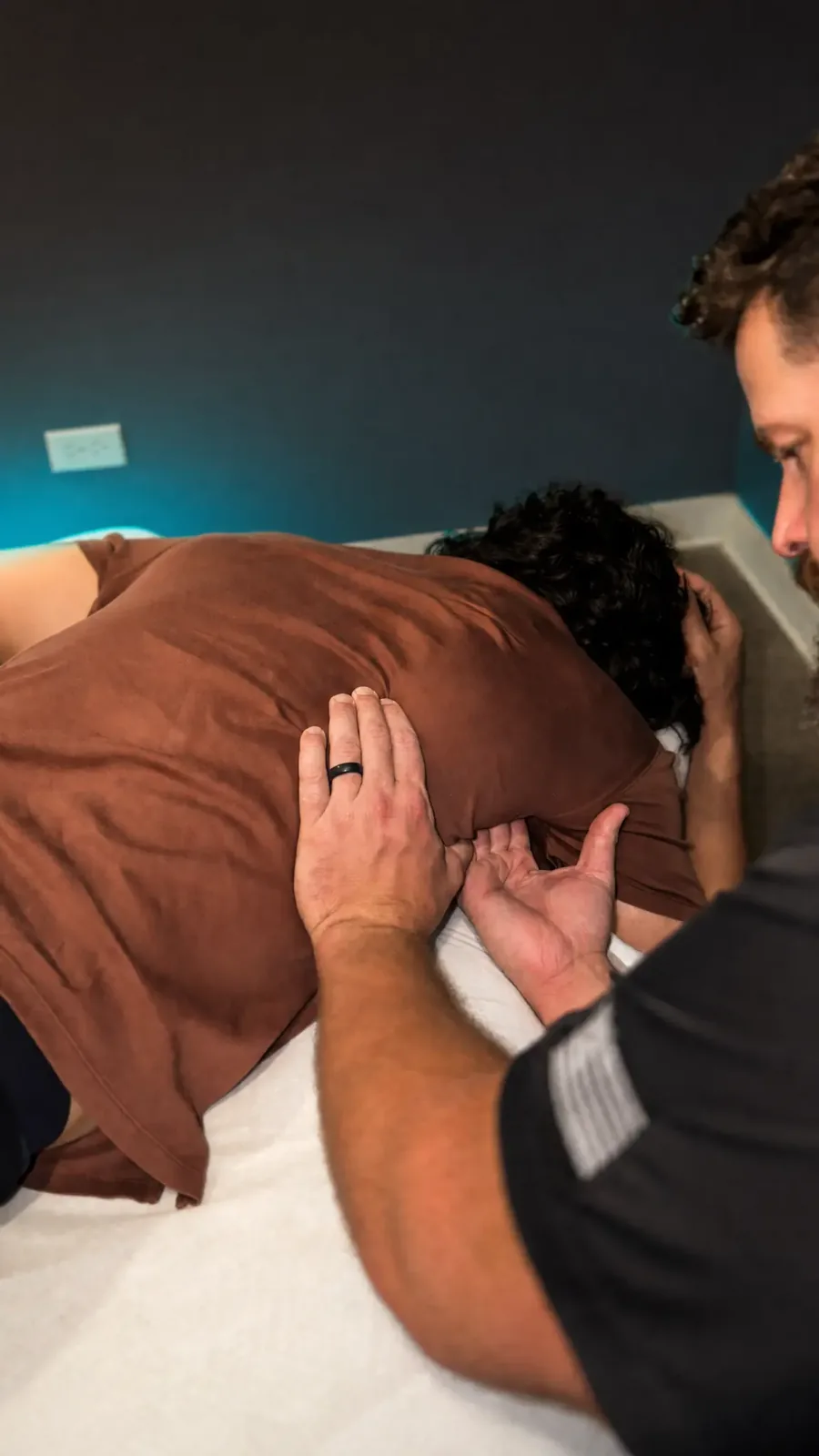
Every session builds on the last, aimed at a specific, diagnosed source of dysfunction — not a one-size-fits-all sequence.
What should I expect at my first visit?
Every new patient starts with an intake evaluation, not a treatment session. Zach personally assesses where the pain is coming from, what's already been tried, and whether the source is soft tissue, structural, or a combination — before building a plan. This first visit is diagnostic, so it may not include a full 60-minute soft tissue session; that begins once the treatment plan is set. Patients in Palatine and surrounding areas including Arlington Heights, Schaumburg, and Buffalo Grove typically complete their first evaluation within a week of reaching out.