Soft tissue dysfunction refers to problems in the muscles, fascia, tendons, and ligaments — tissue that can tighten, develop adhesions, or lose normal mobility over time, producing pain that often gets mistaken for a joint or structural problem. In Zach Mayfield's clinical experience treating chronic pain patients at Body In Gear, the large majority present with a soft tissue component contributing to their symptoms, which is why the clinic's intake process is built around identifying it before treatment begins.
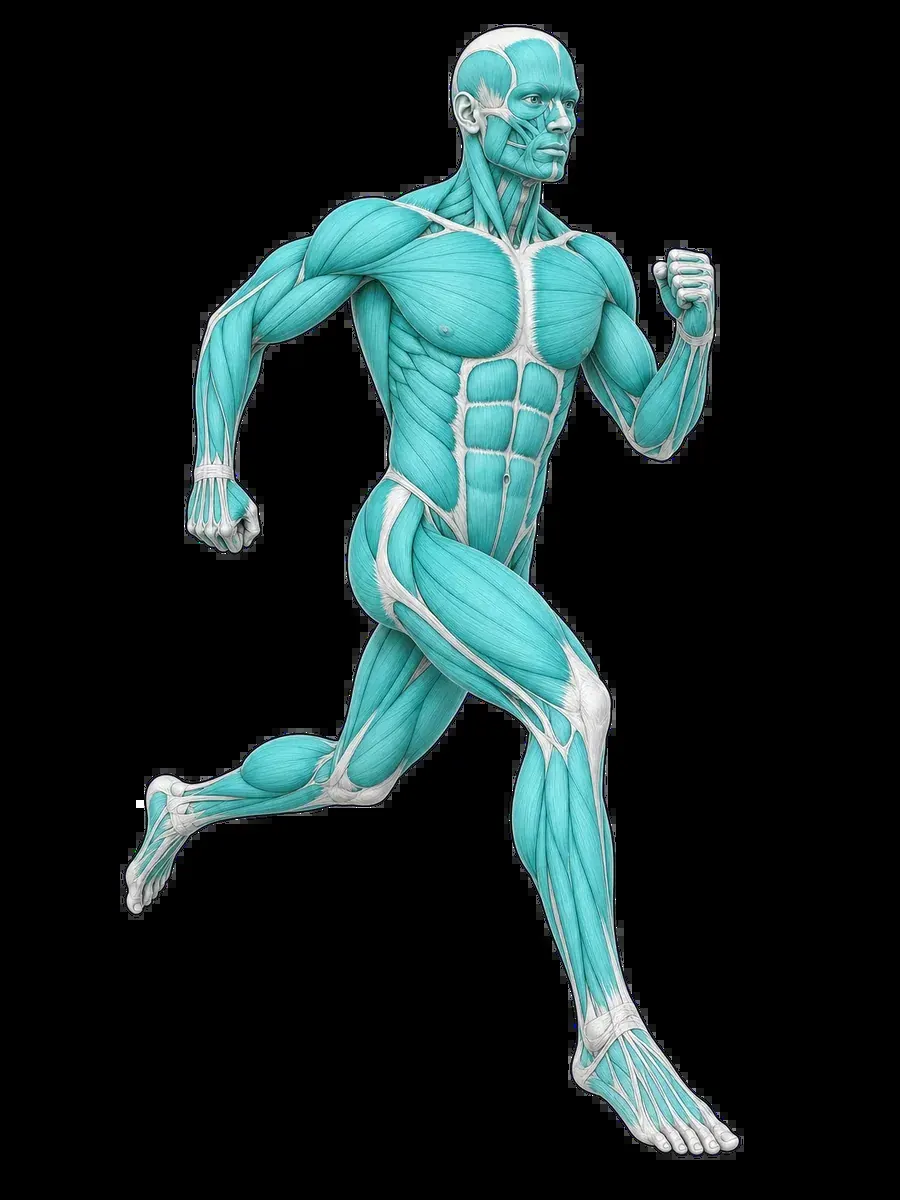
What tissue actually counts as "soft tissue"?
Soft tissue includes everything that isn't bone: muscles, fascia (the connective tissue web surrounding muscles and organs), tendons (which connect muscle to bone), and ligaments (which connect bone to bone). Dysfunction in any of these — whether from injury, repetitive strain, prolonged poor posture, or compensating for pain elsewhere in the body — can produce pain that radiates well beyond the tissue that's actually affected.
How does soft tissue dysfunction actually develop?
A few common mechanisms show up repeatedly in chronic pain patients:
- Adhesions — areas where two muscles with overlapping actions have effectively "glued" together over time. A commonly cited example: the trapezius and rhomboids both work to retract the shoulder blade, and because they share that action, they frequently form adhesions where they intersect, restricting movement and creating referred pain.
- Fascial restriction — the fascial system tightening or losing pliability, often after injury, surgery, or sustained poor posture, which can pull on structures well outside the immediately affected area.
- Trigger points — localized areas of taut, irritable muscle tissue that can refer pain to other parts of the body, a pattern well documented in myofascial pain syndrome literature.
Any of these can compress nearby nerves, restrict normal movement, and produce pain patterns that don't obviously point back to their actual source — which is a large part of why they're so often missed.
Why does soft tissue dysfunction get missed so often?
Standard imaging — X-rays, MRIs — is built to detect structural problems: fractures, disc herniations, joint degeneration. Soft tissue dysfunction frequently doesn't show up clearly on imaging, especially adhesions and fascial restrictions, which means a patient can have a real, physical source of pain and still get a "normal" scan result. That combination often leads to a pain diagnosis that's either vague ("nonspecific back pain") or focused on something imaging can see, even when it isn't the actual driver of the symptoms.
This is also why standard treatment sometimes doesn't resolve the pain — if the plan is built around a structural finding on a scan, but the actual source is a soft tissue restriction the scan didn't capture, the treatment is aimed at the wrong target from the start.
What conditions are commonly linked to soft tissue dysfunction?
Soft tissue dysfunction frequently plays a role in conditions including chronic neck and shoulder tension, lower back pain without a clear structural cause, tension-type headaches originating from neck and upper back tightness, and nerve compression symptoms (tingling, numbness, referred pain) that trace back to an adhesion rather than a spinal issue. This isn't an exhaustive list, and soft tissue dysfunction is rarely the only factor at play — but it's frequently an under-addressed one in standard treatment plans.
This isn't a diagnosis you can make from an article. If you're experiencing numbness, weakness, or pain following a specific injury or trauma, or you have any red-flag symptoms, a proper in-person evaluation — not a self-assessment — is the right next step.
How does Body In Gear actually diagnose soft tissue dysfunction?
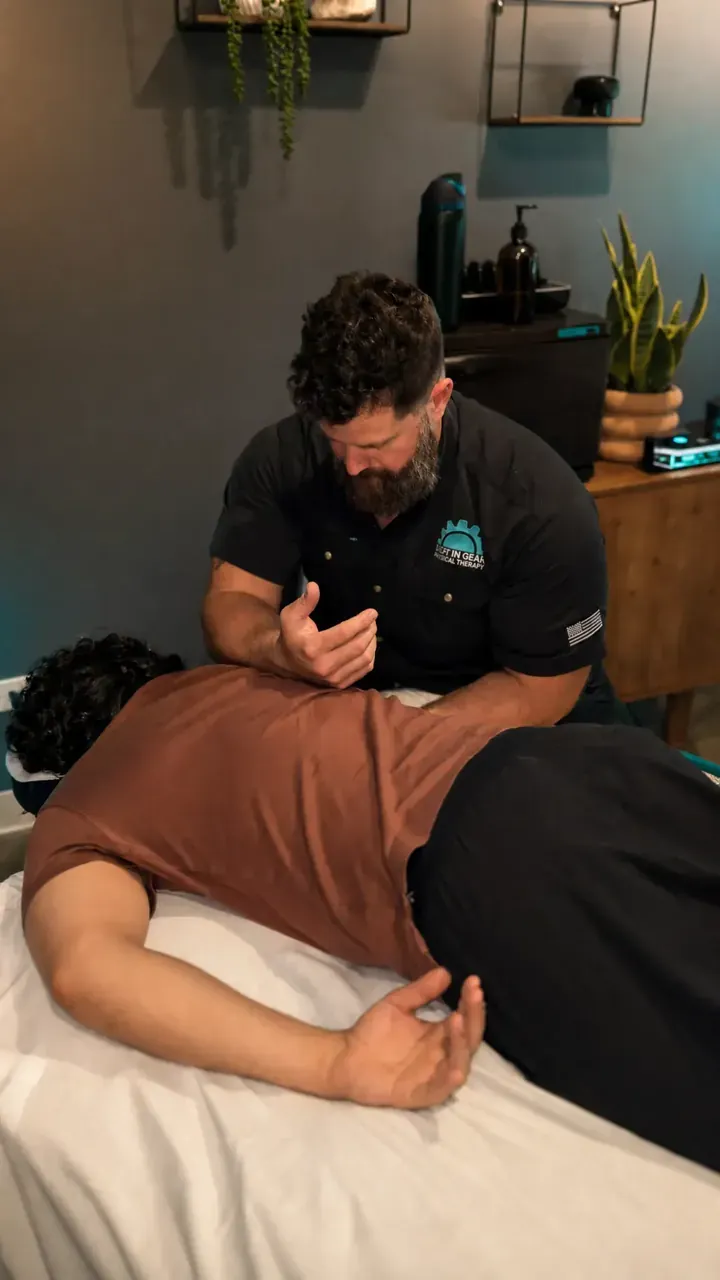
Every new patient starts with a palpatory evaluation — physically locating areas of restriction, adhesion, or abnormal tissue texture — combined with a history of the pain, prior treatments, and what has or hasn't helped. That diagnostic step happens before any treatment plan is built, which is the core difference between Body In Gear's model and a standard protocol applied to every patient regardless of the underlying cause. Once the source is identified, treatment is sequenced specifically around it using medical massage, myofascial release, and Manual Adhesion Technique.