Soft tissue therapy appears to be dose-dependent, meaning both the length of individual sessions and the total number of sessions affect whether it produces measurable improvement. Research on manual soft tissue therapy has found that a minimum treatment volume is often needed before results show up — not just whether the technique was used at all, but how much of it was actually delivered.
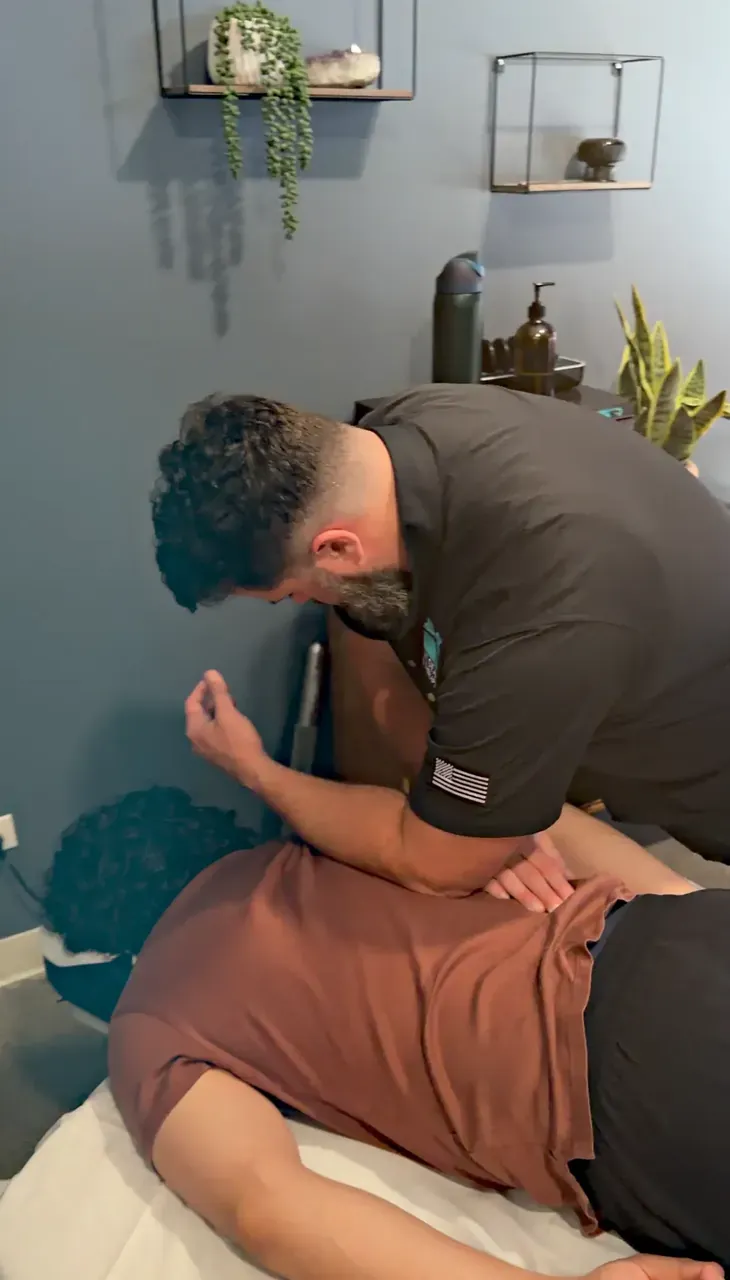
Why does soft tissue therapy dosage matter, not just the technique used?
A therapist can use exactly the right technique on exactly the right muscle and still produce limited results if the total treatment time — per session and across the full plan — is too short to actually change the tissue. This is the same principle behind why a single workout doesn't build strength, or why one dose of physical therapy exercise doesn't resolve a movement pattern that took months or years to develop. Soft tissue restrictions, particularly adhesions and fascial tightening, generally require sustained, repeated treatment to meaningfully change — not a single application.
What does the research actually say about minimum treatment volume?
A 2023 randomized controlled trial on manual soft tissue therapy for jaw muscle (TMJ-related) dysfunction found that measurable improvement in muscle function required at least 5 treatment sessions, with the strongest results appearing after 10 sessions of massage combined with therapeutic exercise. That's a specific, peer-reviewed data point on a specific condition — it isn't a universal number that applies to every type of soft tissue dysfunction — but it illustrates the underlying pattern: soft tissue treatment tends to build cumulatively rather than resolve in one or two visits.
Mayo Clinic has separately documented real, measurable benefit from massage therapy for chronic low back and neck pain, osteoarthritis-related pain, and pain associated with scar tissue — benefit that tracks with sustained treatment rather than a single session.
Does session length matter as much as how many sessions you attend?
Both matter, and they're not interchangeable. A short session repeated many times doesn't necessarily deliver the same result as a fully dedicated session, because certain soft tissue techniques are sequential — for example, medical massage is used first specifically to calm the nervous system before myofascial release and Manual Adhesion Technique can be applied effectively. That sequencing takes real time within a single session; it can't simply be split across multiple short visits and expected to produce the same effect.
This is why total treatment time — session length multiplied by session count — is a more useful way to think about dosage than session count alone.
Why use a 16-session treatment plan as the standard comparison point?
A 16-session plan is a common reference length for outpatient physical therapy and manual therapy plans, which makes it a useful, consistent basis for comparing total soft tissue treatment time across different care models.
| Typical PT/Chiro Clinic | Body In Gear | |
|---|---|---|
| Soft tissue time per visit | 4–5 minutes | Full 60-minute session |
| Total over a 16-visit plan | ~64 minutes | ~960 minutes |
| Difference | — | ~1,400% more |
At 4 minutes of soft tissue work per visit — the typical portion of a session spent on hands-on tissue work before exercise or manipulation begins — a 16-session plan delivers about 64 total minutes of soft tissue treatment. At a full 60-minute dedicated session, that same 16-visit plan delivers roughly 960 minutes, or 16 hours, of direct soft tissue work. See the full breakdown for how this comparison is calculated.
What does adequate treatment volume actually look like at Body In Gear?
Every soft tissue session at Body In Gear is a full 60 minutes, and treatment plans are built around the number of sessions the specific diagnosis actually requires — not a fixed, one-size-fits-all package. Zach personally reassesses progress throughout a plan, adjusting the sequence and focus of sessions as adhesions release and tissue mobility improves, rather than running every patient through an identical protocol regardless of how they're responding.
Progress isn't always linear. Some patients notice meaningful change early; others, particularly with longer-standing chronic pain, need a fuller course of treatment before the cumulative effect becomes noticeable. That variability is normal for soft tissue work and isn't a sign that treatment isn't working.